Marcus Aurelius and the Goddesses of Ephesus and Sardis (Rare)
$1,450.00
Guaranteed authentic ancient coin
Carefully set by hand
Featured in The New York Times
Free insured U.S. shipping
7-day return & exchange policy
Ready to ship in 2–3 days
Pairs well with
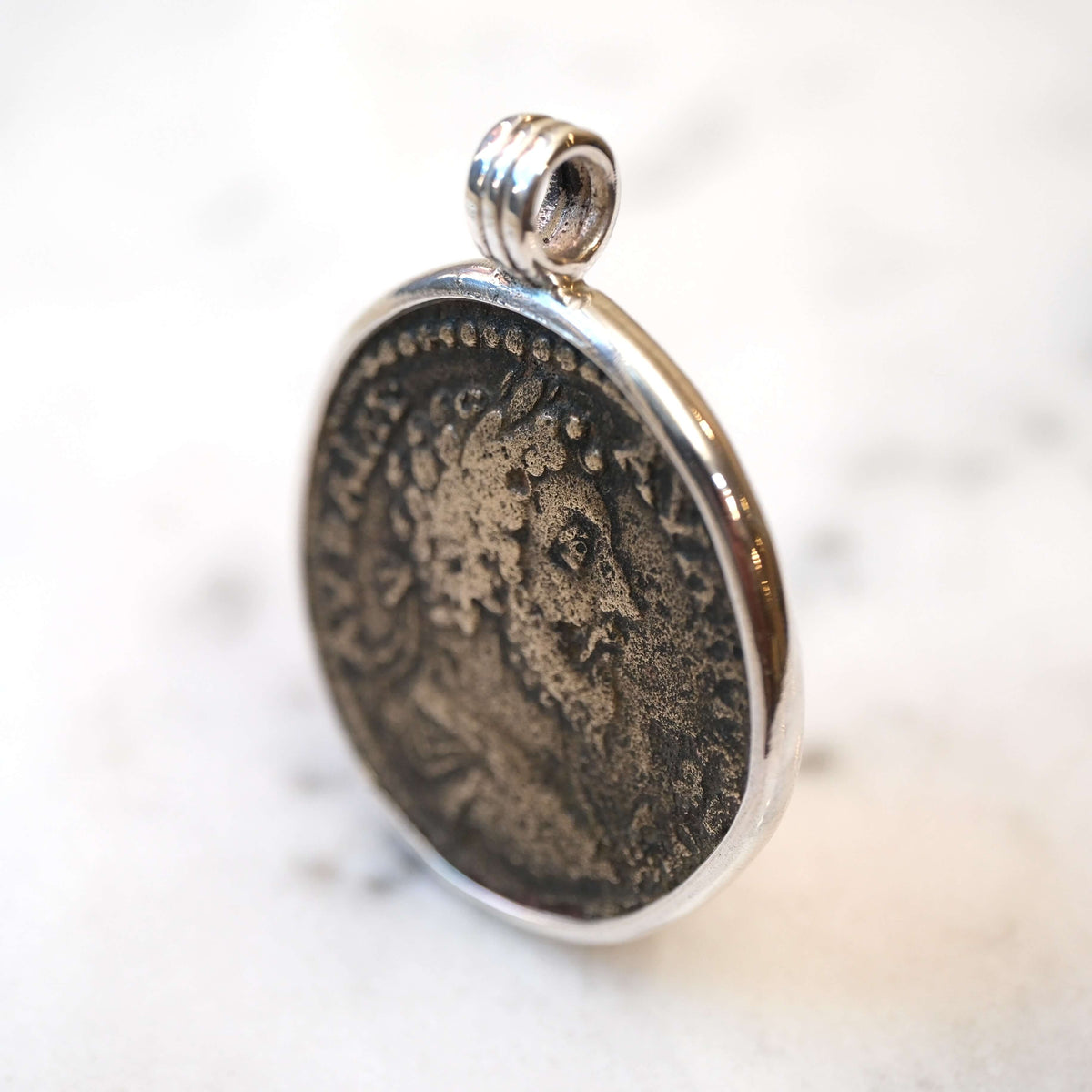
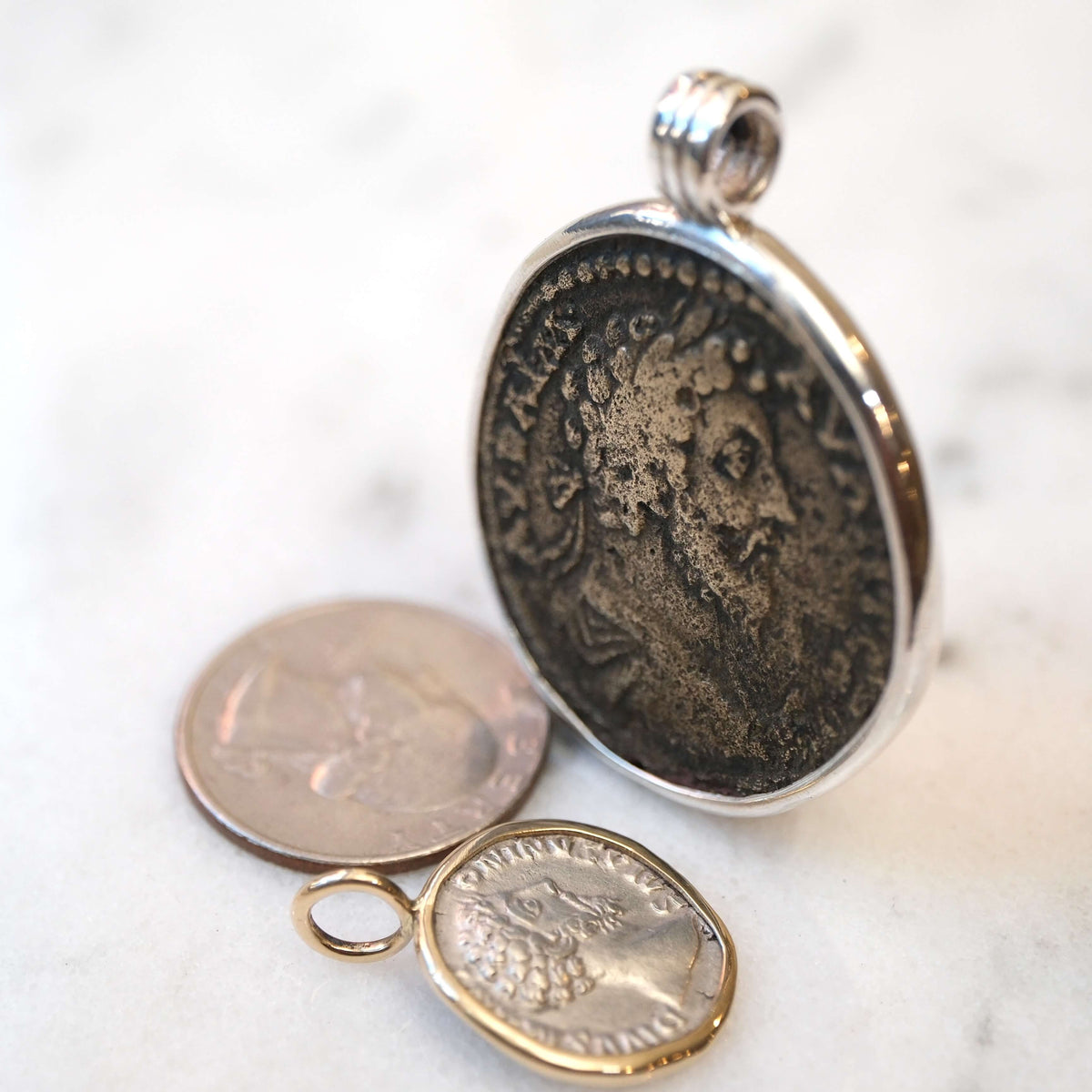
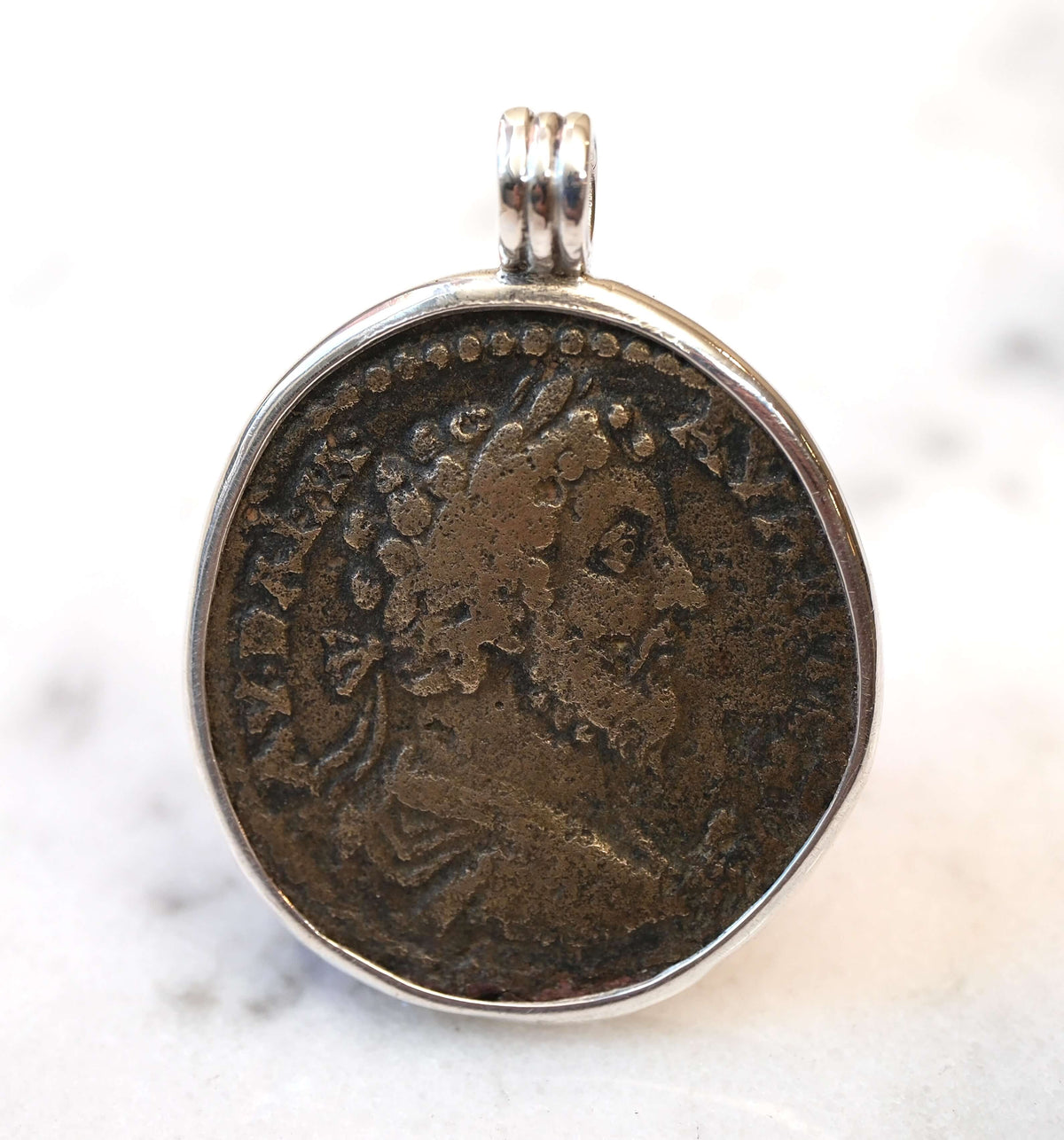
An exceptionally rare Roman provincial bronze coin struck in Ephesus during the reign of Marcus Aurelius (AD 161–180), now hand set in sterling silver.
This remarkable coin brings together three extraordinary images from the ancient world. On the obverse appears Marcus Aurelius, the philosopher-emperor, wearing military armor and a cloak. On the reverse stand two sacred cult statues: Artemis of Ephesus, flanked by stags, and Kore of Sardis, crowned with a crescent moon.
The reverse celebrates homonoia, the Greek ideal of concord and harmony, commemorating the relationship between two important cities of Roman Asia Minor.
Its substantial size, unusual imagery, and exceptional rarity make this a particularly compelling example of Roman provincial coinage
The History
Why I Chose This Coin
I chose this coin for three reasons: its rarity, its impressive size, and the remarkable imagery on its reverse.
Only three specimens are recorded in the referenced RPC catalogue entry, making this an unusually scarce type. Its larger format also gives the ancient engraver's work room to breathe, revealing details that would be difficult to appreciate on a smaller Roman denarius.
But what interests me most is the reverse. Rather than the familiar military victories and personifications found on much Roman imperial coinage, this coin depicts two sacred statues belonging to different cities. It is an image of religious identity, diplomacy, and civic pride, all expressed on a single piece of bronze.
I also love the contrast between the commanding portrait of Marcus Aurelius and the two ancient goddesses. The coin feels almost like a miniature monument, preserving not just the likeness of an emperor but the sacred traditions of the cities that lived under his rule.
Its substantial weight and size give it a particularly satisfying presence as a pendant.
The History
Marcus Aurelius and the Cities of Asia Minor
Marcus Aurelius ruled the Roman Empire from AD 161 to 180, a period remembered for its wars, epidemics, and the philosophical writings of the emperor himself.
While Rome governed an enormous territory, the Greek cities of Asia Minor retained strong local identities, religious traditions, and civic institutions. They expressed these identities through their own provincial coinage, often choosing imagery quite different from that used on coins struck in Rome.
This bronze coin was issued at Ephesus, one of the wealthiest and most important cities of the eastern Mediterranean.
Artemis of Ephesus
Ephesus was famous throughout antiquity for its magnificent Temple of Artemis, one of the Seven Wonders of the Ancient World.
The Ephesian Artemis differed considerably from the familiar Greek image of the goddess as a huntress carrying a bow. Her cult statue was a rigid, richly adorned sacred figure, associated with protection, fertility, and the prosperity of the city.
On this coin, she appears wearing a tall headdress and standing between two stags, animals traditionally associated with the goddess.
The temple and its sacred image were central to Ephesian identity. Their appearance on the city's coinage proclaimed its religious prestige to the wider Roman world.
Kore of Sardis
Beside Artemis stands Kore, a goddess associated with Persephone, daughter of Demeter, whose mythology concerned the changing seasons, the underworld, and the renewal of life.
The cult statue of Kore of Sardis wears a tall crown surmounted by a crescent moon, a striking detail that distinguishes her from the Ephesian goddess.
Sardis, the former capital of the wealthy kingdom of Lydia, was another important city of Roman Asia Minor, with a history stretching back many centuries before Roman rule.
By placing the two goddesses together, the coin gives visual form to the relationship between these ancient cities.
What’s Included
Authentic Marcus Aurelius denarius set in solid 14 gold bezel
Matching sterling silver chain (18 inches), 14k gold upgrade available
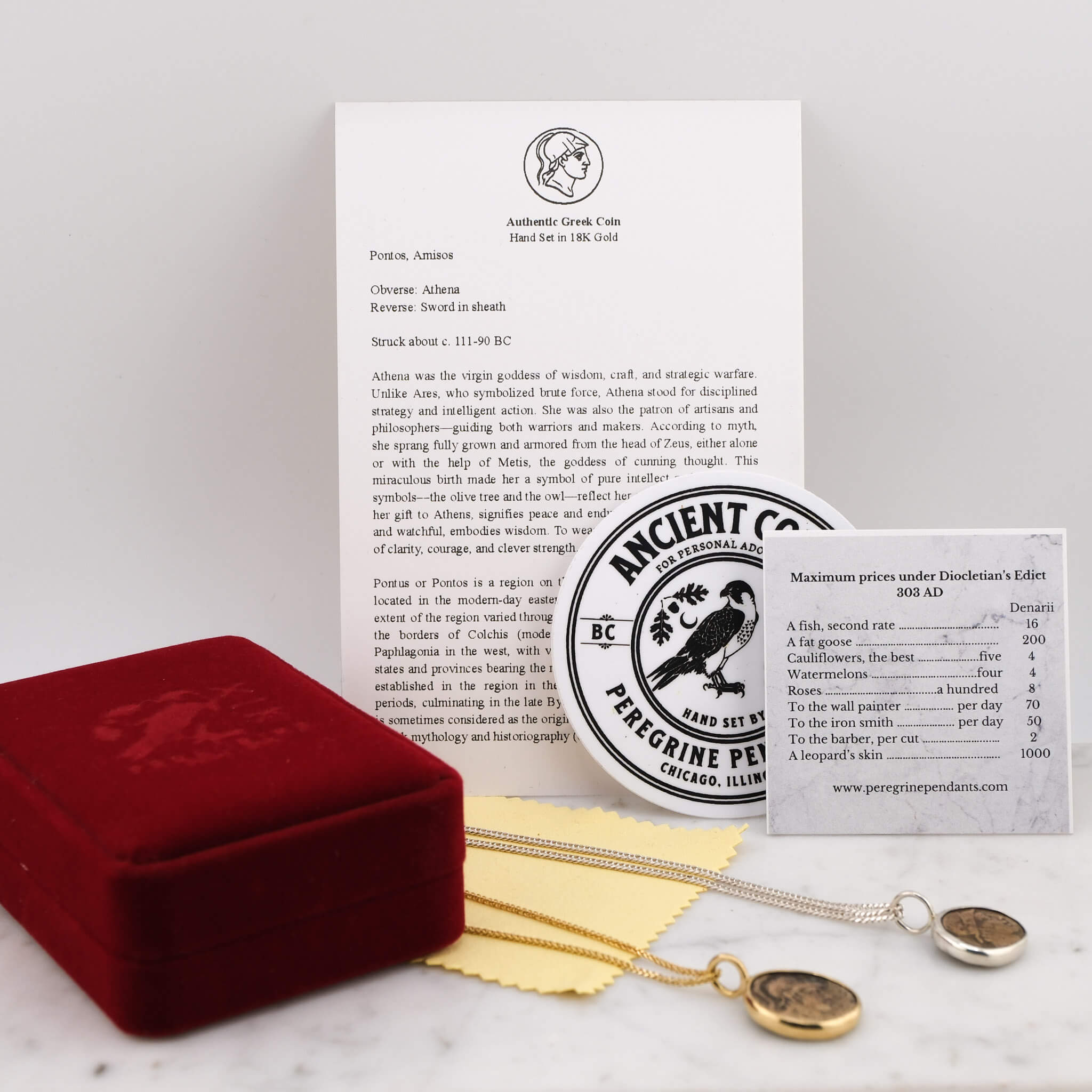
Certificate of authenticity with coin history
Red velvet presentation box
Polishing cloth and care instructions
Free insured U.S. shipping, worldwide shipping available
Coin Details
Empire: Roman Empire, provincial coinage
Region: Ionia, Asia Minor (modern Turkey)
City: Ephesus
Emperor: Marcus Aurelius (AD 161–180)
Date: AD 161–180
Denomination: Large bronze provincial coin (AE)
Obverse: Laureate bust of Marcus Aurelius facing right, wearing cuirass and military cloak (paludamentum)
Obverse inscription: Α Κ Μ ΑΥ ΑΝΤΩΝΕΙΝΟϹ
Reverse: Cult statue of Artemis of Ephesus standing between two stags, facing the cult statue of Kore of Sardis, crowned with a crescent moon
Reverse inscription: ΕΦΕϹΙΩΝ ΚΑΙ ϹΑΡΔΙΑΝΩΝ ΟΜΟΝΟΙΑ
Marcus Aurelius and the Goddesses of Ephesus and Sardis (Rare)
$1,450.00
Need help?
If you have any questions, you are always welcome to contact us. We'll get back to you as soon as possible, within 24 hours on weekdays.
Shipping Information
Use this text to answer questions in as much detail as possible for your customers.
Customer Support
Use this text to answer questions in as much detail as possible for your customers.
FAQ’s
Use this text to answer questions in as much detail as possible for your customers.
Contact Us
Use this text to answer questions in as much detail as possible for your customers.
Testimonials
My four daughters absolutely LOVED them! Your work is excellent and the pendants look great- Thank you!
— Eva S.
Thank you for making this spectacular necklace! I provided the denarius of Julia Domna, and they did the rest. I was delighted with the results - and so (more importantly) was my girlfriend.
— Garrett Ryan from Toldinstone
Got the ring today! Love it!
— Margaret B.
The Athenian Owl pendants are awesome! We're saving the gift for a special occasion. My wife loved it, she got it and was all hushed quiet, that smile while opening and handling it for the first few minutes. It's special.
— Joe E.
OMG the coin. It’s sooo gorgeous. I love it so so so so much. Thank you for keeping me in mind and finding this piece of perfection for me.
— Cecilia A.
Curated Classics. History in Every Piece
FAQs
Are all coins authentic?
Yes! All coins are genuine, not replicas. Fakes are rare because good forgeries take too much effort for low-value coins, and bad ones are easy to spot.
Where are your coins bought?
Mostly from reputable ancient coin auctions in Europe and the USA, plus private collections.
Do you ship internationally?
Yes, we proudly ship worldwide. Shipping options and times vary by country - you’ll see available methods at checkout.
Can I send you my own coin to make a pendant?
Absolutely! We love turning personal coins into wearable pieces. Just email us at info@peregrinependants.com to discuss your custom order.
What if my pendant needs repair?
If your pendant ever needs repair or resizing, contact us - we’re happy to help keep your piece in top shape.
Choosing a selection results in a full page refresh.