

The Romulus and Remus Coin: Rome’s Founding Myth in Ancient Coinage
Few images from the ancient world are as enduring as the she-wolf nursing Romulus and Remus. Appearing on Roman coins for centuries, this scene connected everyday currency to the legendary origins of Rome itself. Today, these coins remain among the most recognizable and meaningful pieces of ancient coinage, combining mythology, history, and symbolism in a remarkably small work of art.
At Peregrine Pendants, the Romulus and Remus motif has long been one of our favorites. Even after nearly seventeen centuries, the image remains instantly recognizable: a reminder of Rome's legendary beginnings and the stories that shaped an empire.

Who Were Romulus and Remus?
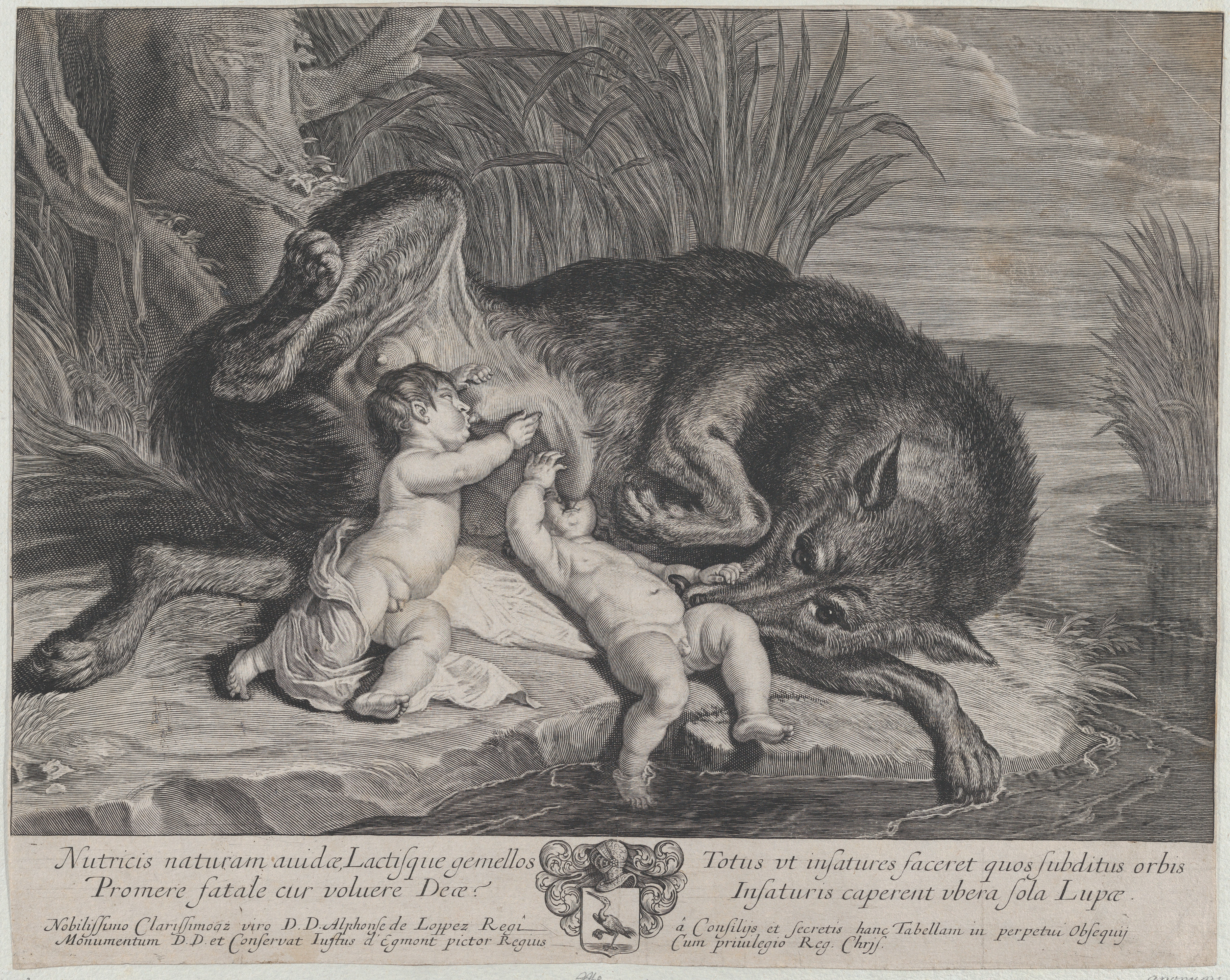
According to Roman tradition, Romulus and Remus were the twin sons of Rhea Silvia and the god Mars.
Fearing a challenge to his power, King Amulius ordered the infants to be abandoned beside the River Tiber. Rather than perish, they were discovered by a she-wolf, who nursed and protected them in a cave known as the Lupercal. A shepherd named Faustulus later found the twins and raised them as his own.
As adults, the brothers decided to found a new city. Their partnership ended in tragedy when a dispute over the city's future led Romulus to kill Remus. Romulus became the first king of Rome, which Roman tradition dated to 753 BC.
Whether historical or not, the story became central to Roman identity. For centuries, Romans looked to the twins and the she-wolf as symbols of the city's divine origins and destiny.
The Most Famous Romulus and Remus Coin
Although the motif appeared on various Roman coins, the type most collectors encounter today was issued during the reign of Constantine the Great and his sons around AD 330–340.
Known as the URBS ROMA commemorative, these small bronze coins were struck throughout the empire to celebrate the city of Rome during a period of significant political change.
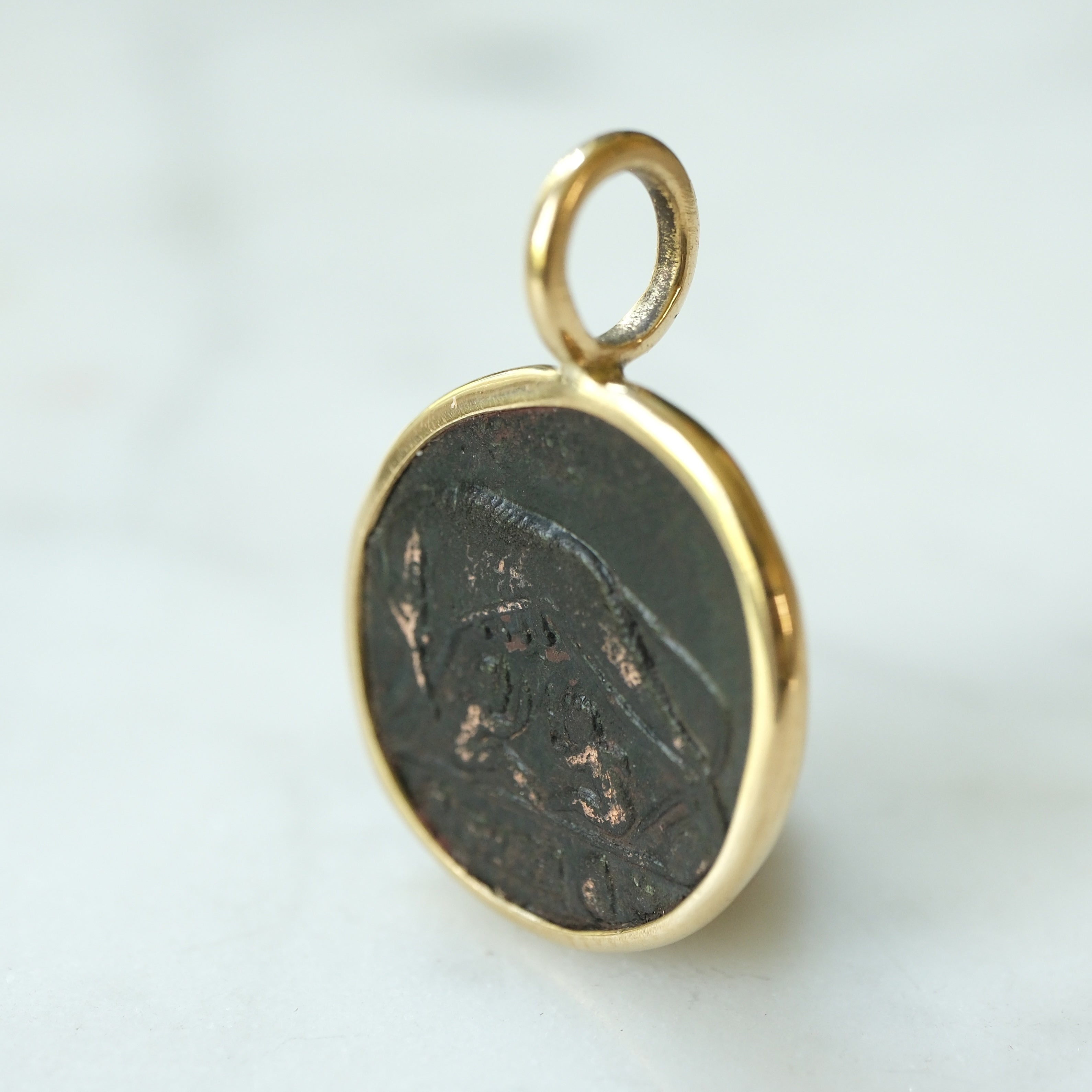
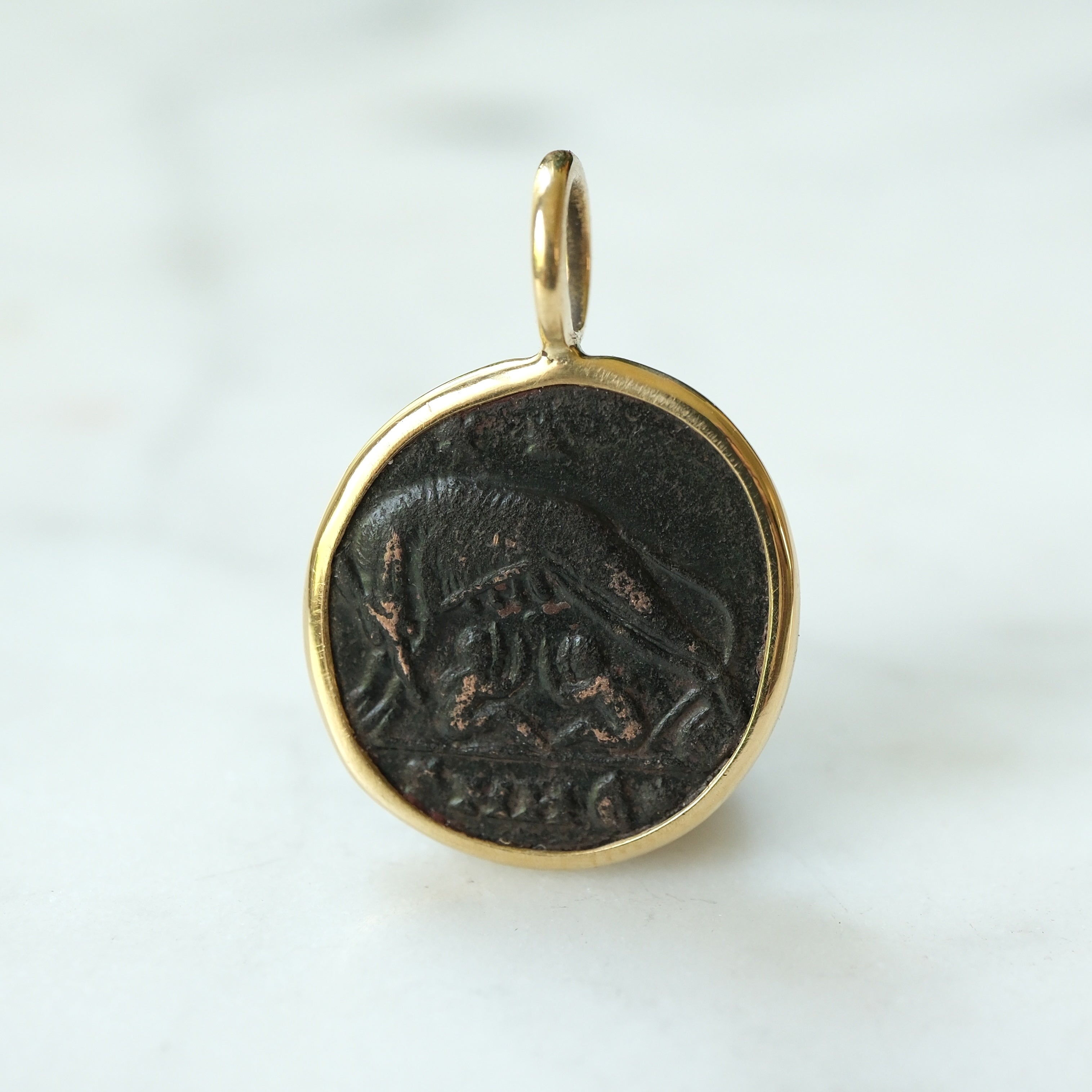
The obverse typically depicts the helmeted personification of Rome, while the reverse shows the she-wolf standing over Romulus and Remus. Above the scene, two stars often appear, adding a celestial dimension to the imagery.
Despite their modest size, these coins contain one of the most important stories in Roman culture.
Why Romans Placed the Twins on Their Coins
Ancient coins served a practical purpose, but they were also a powerful means of communication. Every coin carried images and messages chosen by those in authority.
The she-wolf and twins conveyed several ideas at once:
Rome's ancient origins
The image reminded viewers that Rome's roots stretched back to a heroic and divinely guided past.
Legitimacy and continuity
Emperors could associate themselves with Rome's foundation story and present their rule as part of a long and unbroken tradition.
Strength through adversity
The survival of the abandoned twins reflected Rome's own self-image: a civilization that overcame hardship to achieve greatness.
In an age without newspapers or mass media, coins carried these messages across the empire, passing through the hands of soldiers, merchants, and ordinary citizens.
Symbolism of the She-Wolf
The wolf occupies a unique place in Roman culture.
To modern eyes, wolves often symbolize danger or wilderness. To the Romans, however, the she-wolf represented protection, survival, and divine favor. Her role in preserving the twins transformed her into one of the most important symbols of the city.
The image also carried religious associations. The cave where the twins were said to have been discovered, the Lupercal, was connected to the festival of Lupercalia, an ancient rite linked to fertility, purification, and renewal.
As a result, the wolf was more than an animal. She became a visual shorthand for Rome itself.
A Few Fascinating Facts
The Image Appeared for Centuries
The she-wolf and twins were depicted on Roman coinage from the Republican period through Late Antiquity, making it one of the longest-lived motifs in Roman numismatics.
The Capitoline Wolf May Not Be Ancient
The famous bronze statue known as the Capitoline Wolf was long believed to date to antiquity. Modern research suggests that the wolf itself may have been created during the medieval period, while the figures of the twins were added during the Renaissance.
The Myth Contains a Dark Ending
Although the image celebrates Rome's origins, the legend concludes with Romulus killing Remus. Ancient Romans nevertheless embraced the story as a symbol of unity, destiny, and the founding of their city.
The Coins Were Struck Across the Empire
URBS ROMA coins were produced at numerous mints, including Trier, Constantinople, Antioch, and Rome itself, demonstrating the importance of the city's founding myth throughout the Roman world.
Why Romulus and Remus Coins Remain Popular Today
The appeal of these coins extends far beyond their historical significance.
The imagery is instantly recognizable, even to those unfamiliar with ancient numismatics. The story speaks to themes that remain relevant today: survival, ambition, family, sacrifice, and the creation of something lasting.
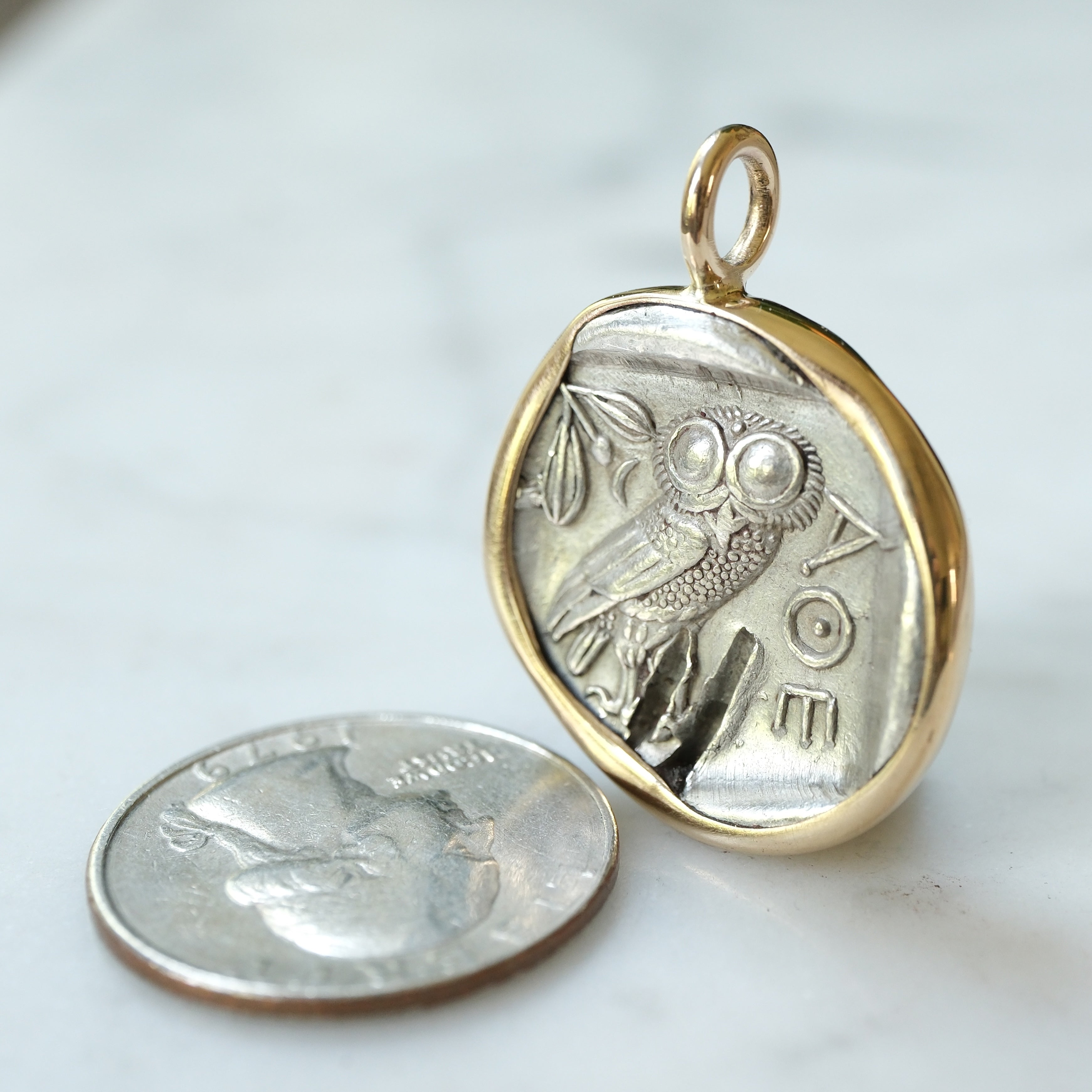
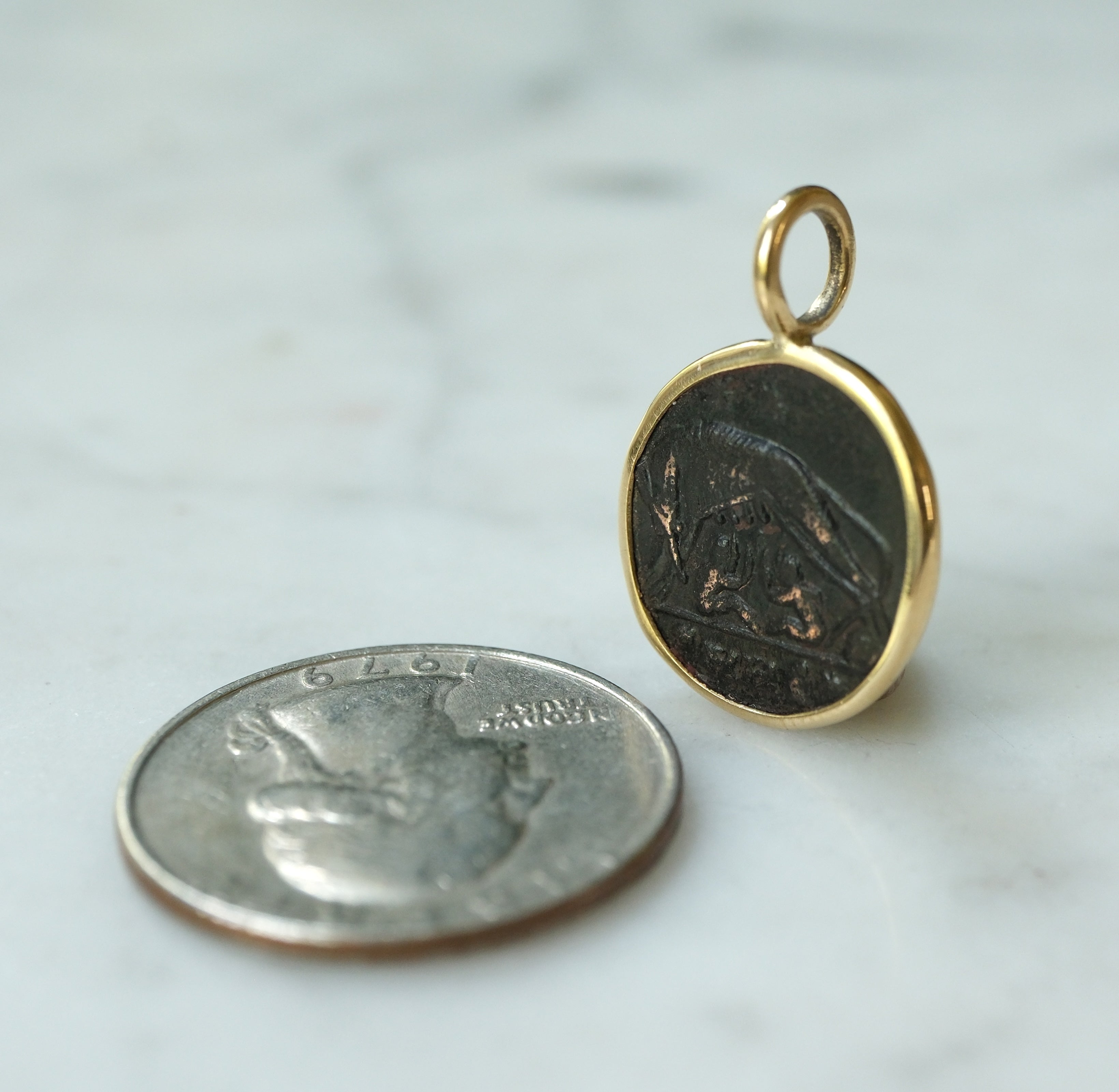
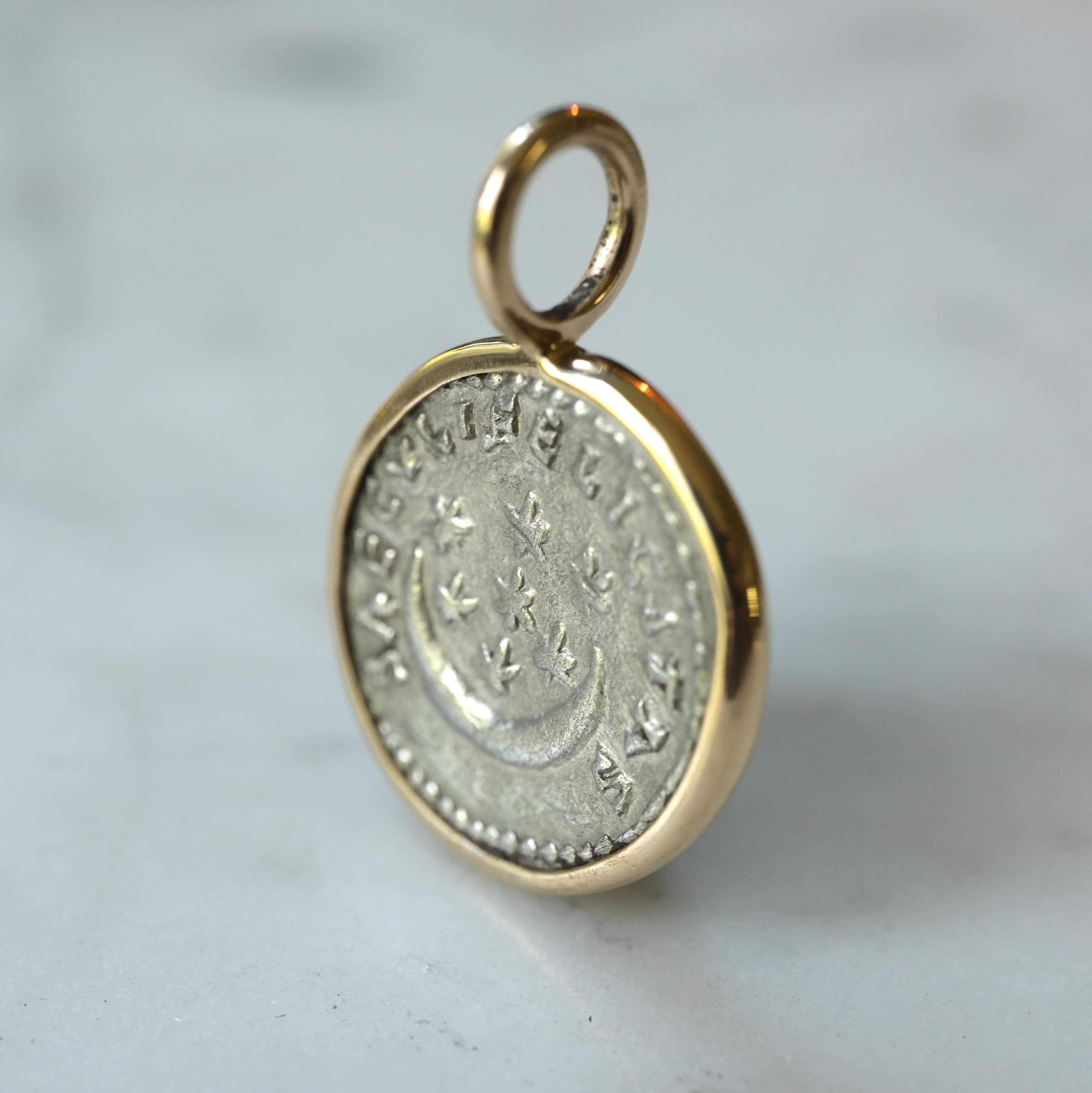
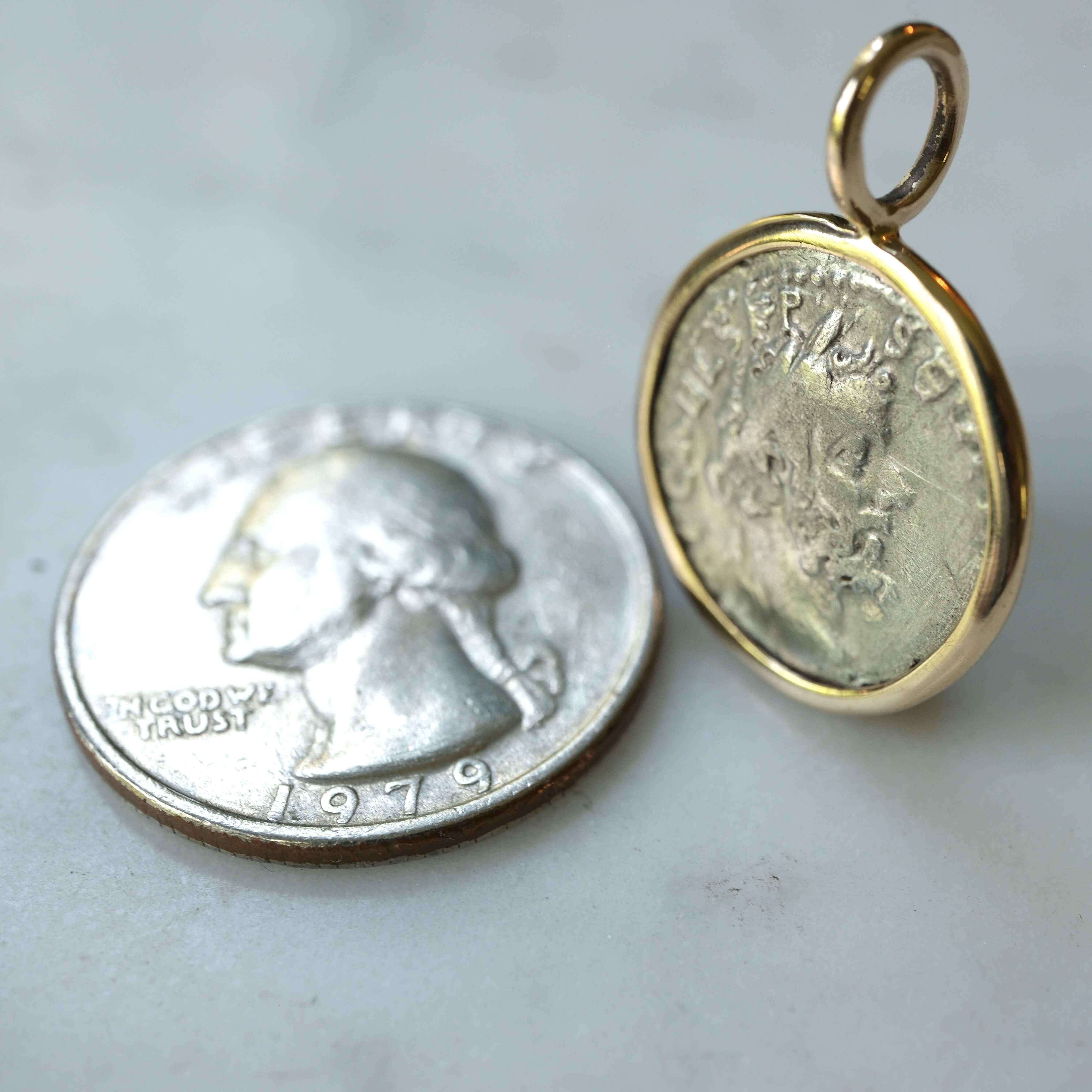
Having handled many of these coins over the years, what continues to impress me is how effectively Roman engravers captured the scene. Even on a small bronze coin, often no larger than a modern quarter, the she-wolf and twins remain unmistakable.
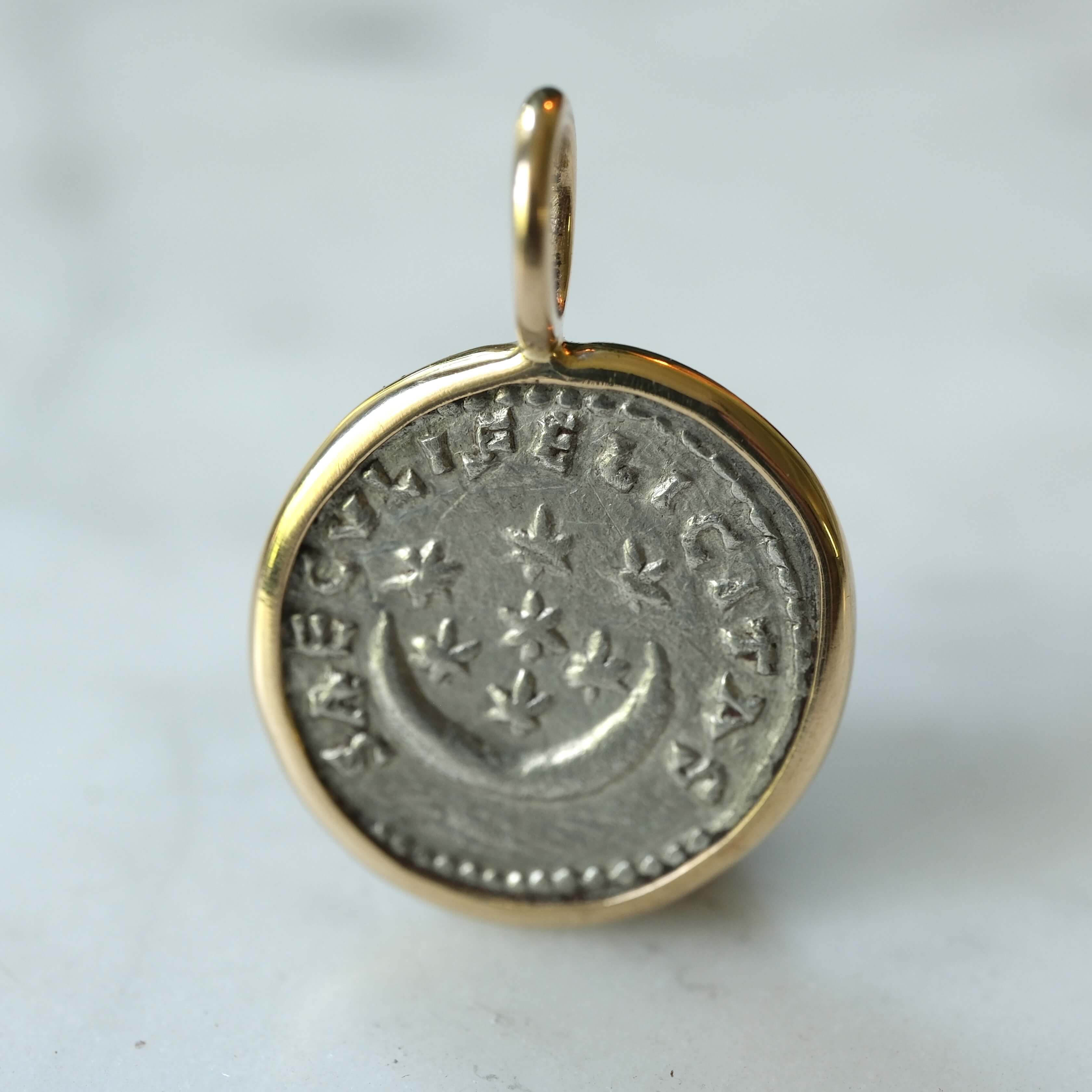
That clarity of design is one reason these coins work so well as jewelry. They are wearable pieces of history whose symbolism remains meaningful nearly two thousand years after they were struck.
Authentic Ancient Coin Jewelry
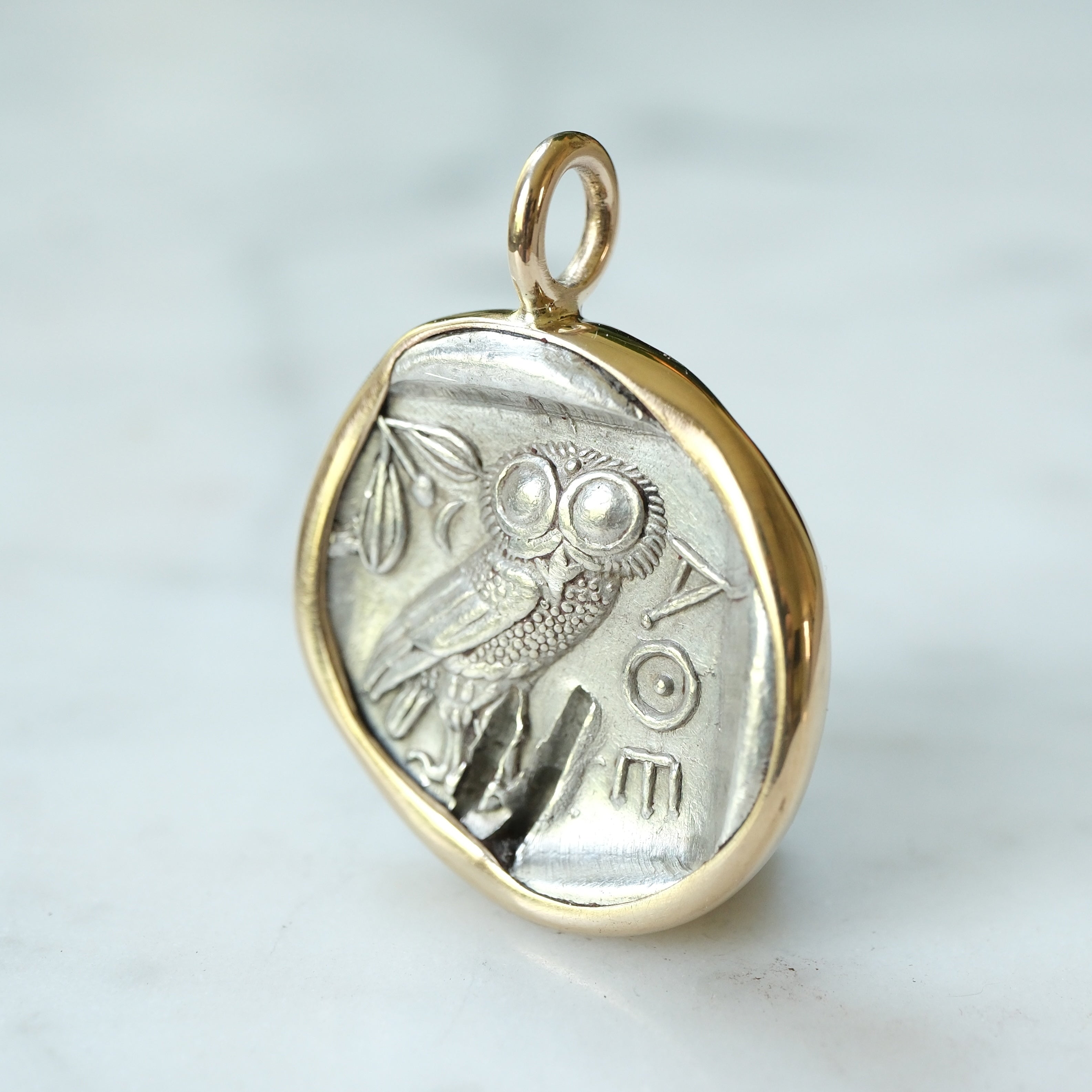
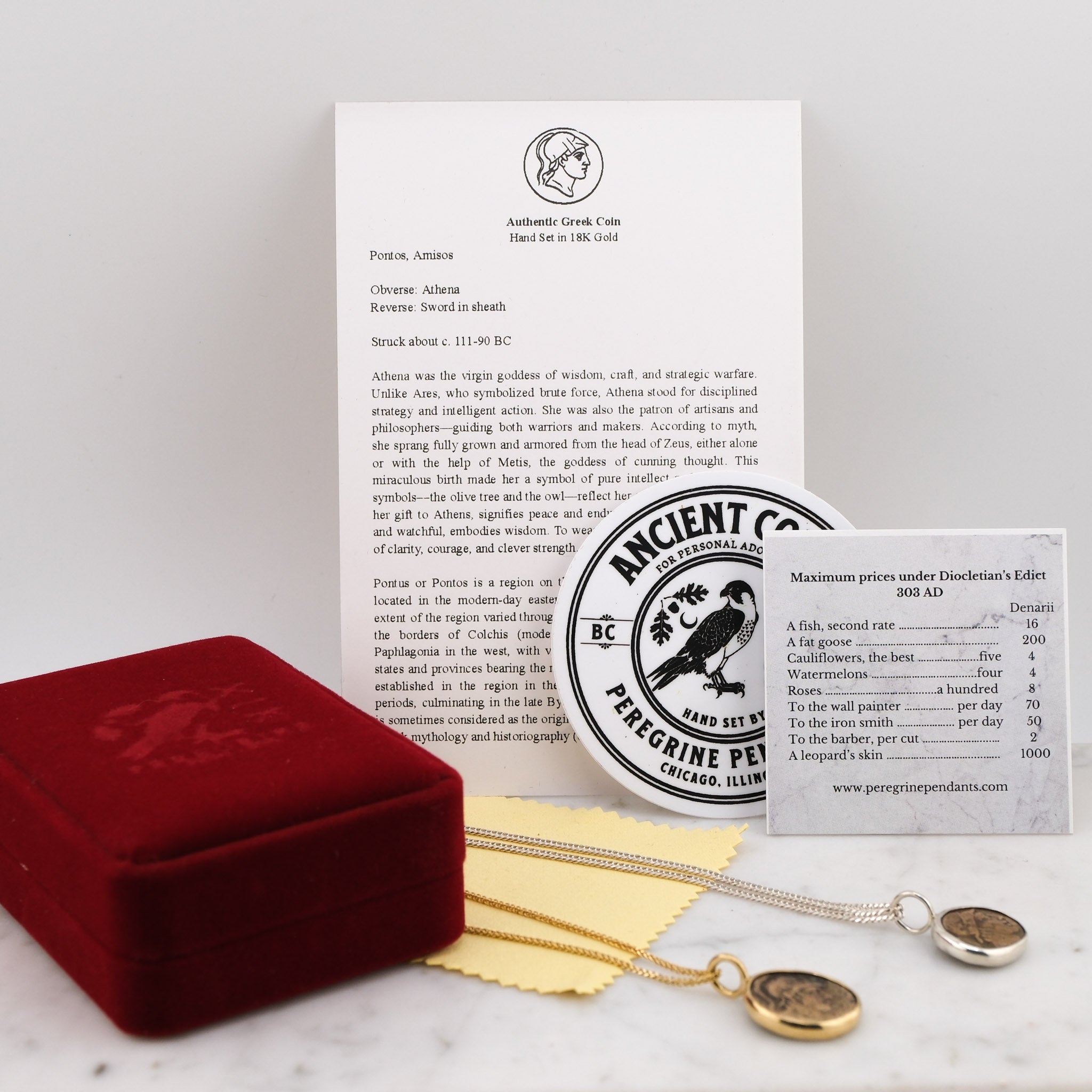
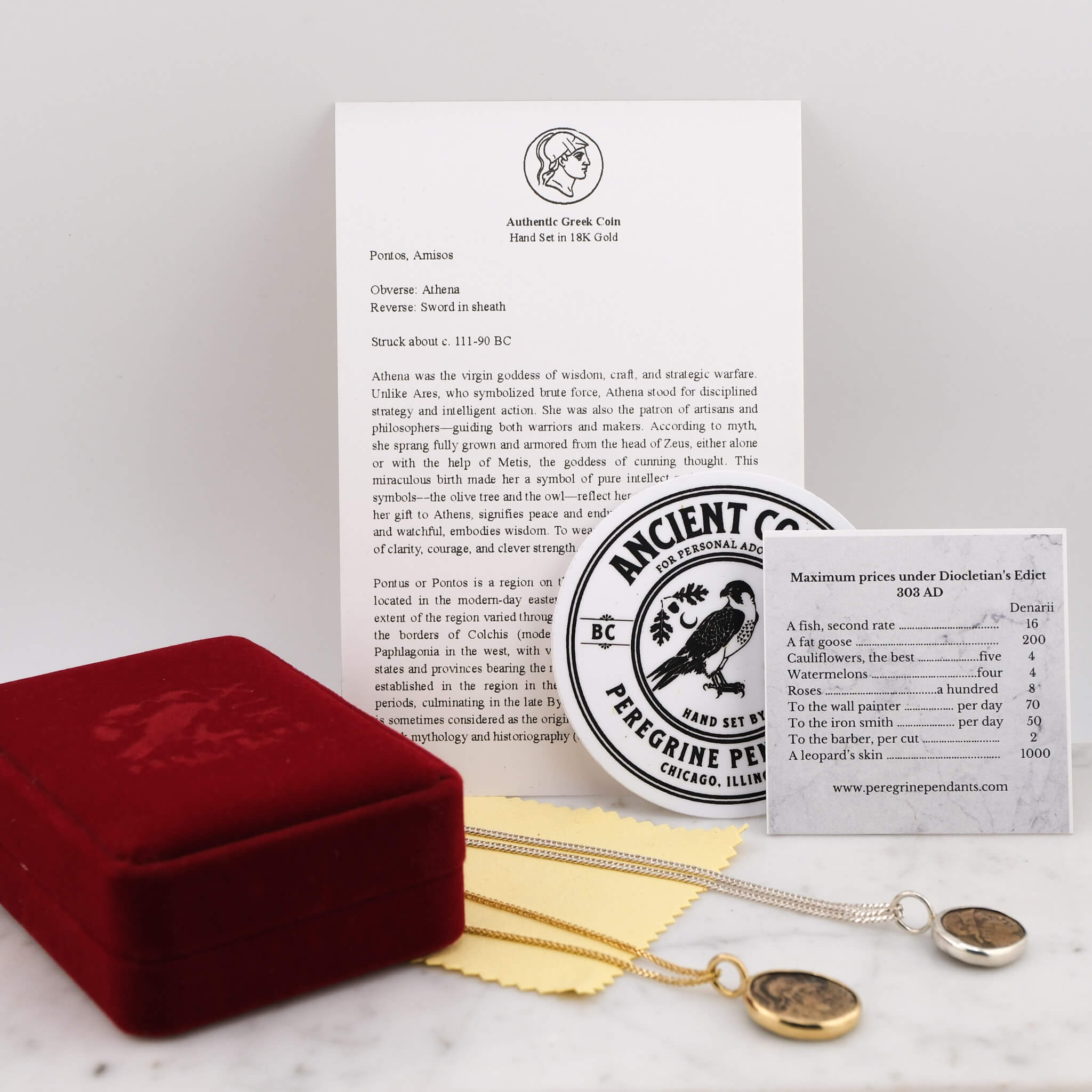
At Peregrine Pendants, we transform genuine ancient coins into heirloom-quality jewelry, preserving both the object and the story it carries.
Each Romulus and Remus pendant begins with an authentic ancient coin and is accompanied by historical information about the piece and its place within the broader history of Rome. Explore our collection to discover one of history's most enduring symbols: the she-wolf and the twins who, according to legend, founded the Eternal City.





Share:
Athens’ Owl Coin
The Timeless Allure of the Marcus Aurelius Ancient Coin