

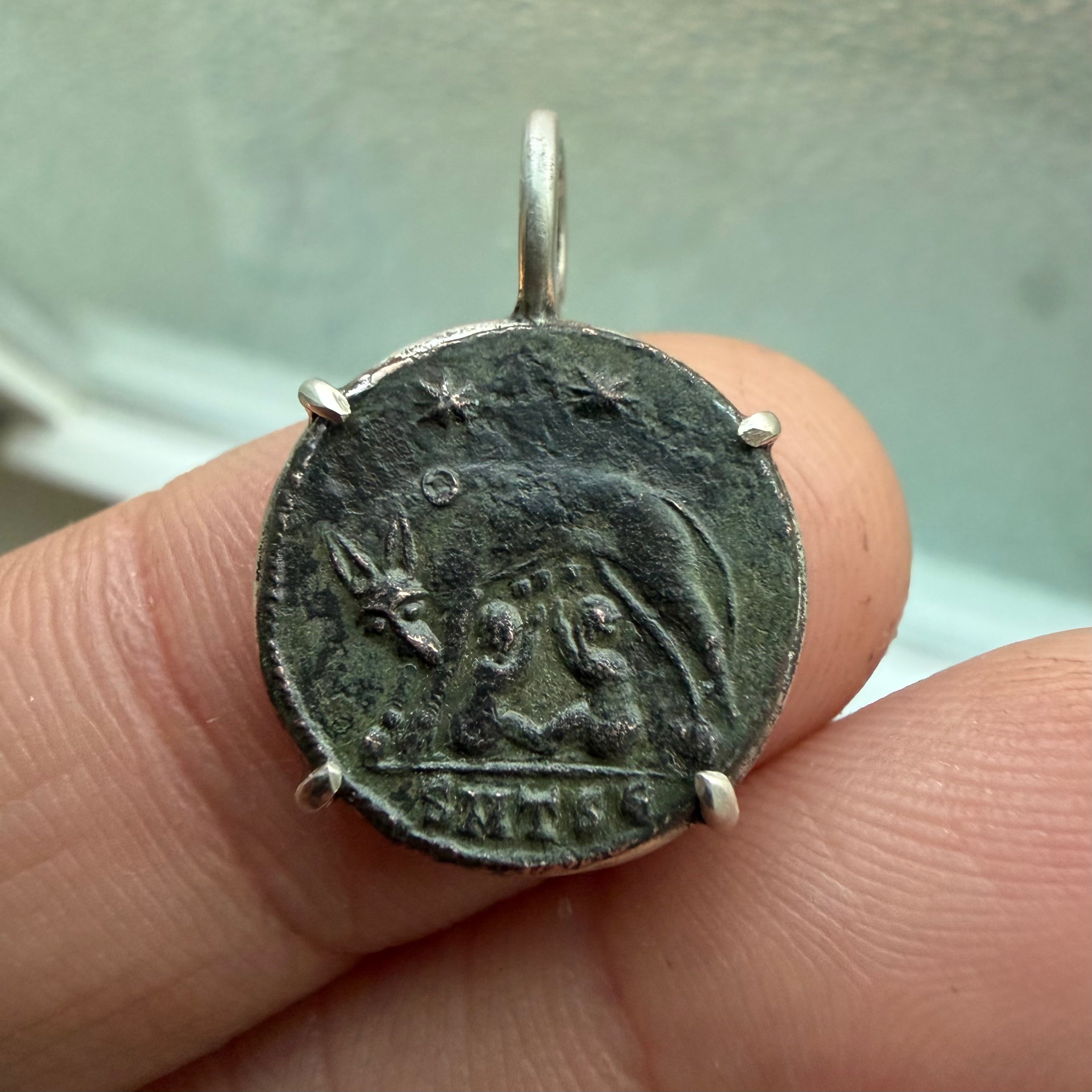
Ancient coins tell the story of civilizations in a way few artifacts can, and one of the most recognizable images ever struck in metal is the Romulus and Remus coin, featuring the legendary founders of Rome being nursed by a she-wolf. For collectors, historians, and jewelry lovers alike, this motif is a fascinating blend of myth, political symbolism, and Roman identity.
At Peregrine Pendants, we’re drawn to ancient coins that carry entire legends within their imagery. The Romulus and Remus coin is one of the richest stories of all.
 Who Were Romulus and Remus? The Myth Behind the Coin
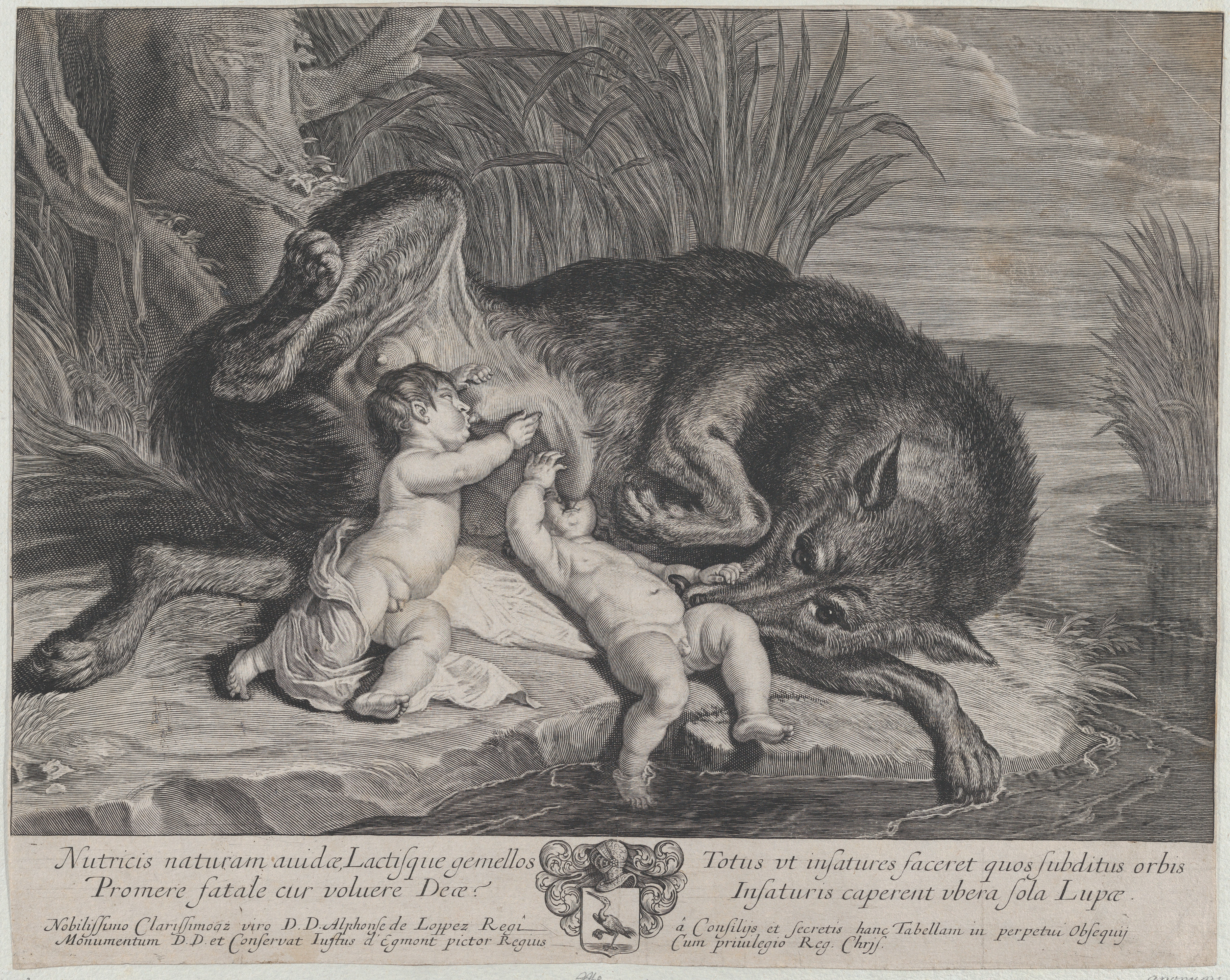
The famous image shows:
-
Twin infants
-
A she-wolf (lupa)
-
The twins suckling beneath her protective stance
According to Roman mythology, the twins were the sons of Rhea Silvia and the god Mars. Ordered to be drowned at birth, they survived through a miracle: a she-wolf discovered them by the River Tiber and nursed them in the cave of the Lupercal. They were later found and raised by a shepherd named Faustulus, before ultimately founding what would become Rome.
This myth served as the symbolic foundation of Roman culture, making the Romulus and Remus coin an essential piece of Rome’s visual and political identity.

Why the Romulus and Remus Coin Was So Important
Throughout Roman history, from the Roman Republic through the late Roman Empire, this design served as a powerful propaganda symbol.
During the Republic
Moneyers used the imagery to align their political families with Rome’s divine origins.
During the Empire
Emperors such as Antoninus Pius, Magnentius, Constantius II, and Valentinian issued coins featuring the twins to emphasize:
-
Rome’s resilience
-
Their own legitimacy as rulers
-
Continuity with Rome’s mythic founding
The she-wolf became one of the earliest forms of “Roman branding”—a universal emblem of the city and its power.
 Symbolism Hidden in the Design
Collectors love examining the nuances of Romulus and Remus coins because small artistic choices carry big meaning:
1. The Wolf’s Pose
A proud, alert wolf suggests divine protection, whereas a softer, more naturalistic wolf emphasizes nurturing and survival.
2. The Twins’ Gestures
Some versions show quiet dependence; others portray the twins more dynamically, emphasizing vitality and Rome’s vigorous origins.
3. Religious Layers
The wolf was strongly associated with Lupercalia, a Roman fertility festival held on Feburary 15th, believed to purify the city and ensure prosperity, aligning Rome’s foundation myth with ritual tradition.
4. Political Messaging
Coins were Rome’s mass media. This image reminded every citizen, soldier, and traveler of Rome’s "sacred birthright".
 Fun Facts About the Romulus and Remus Coin
Ancient Roman lore always has surprises, and this coin is full of them:
1. The “Wolf” Might Not Be a Wolf
Some scholars believe the “she-wolf” may have originally been a symbol for a courtesan, since lupa was also slang for a prostitute in Roman times. Over centuries, the myth and language have intertwined.
2. The Wolf Sculpture in Rome Might Be Medieval
The famous bronze Capitoline Wolf, the statue everyone associates with the legend, was long thought to be ancient. Modern tests show it may actually be medieval, with the twins added in the 15th century.
3. The Twins Appear on Coins for Over 600 Years
From around the 3rd century BCE all the way into the late 4th century CE, the image was repeatedly revived, being one of the longest-running motifs in Roman numismatics.
4. A Propaganda Tool for Civil Wars
During Rome’s many internal conflicts, leaders used the coin’s imagery to claim they were the true heirs of Rome’s founders.
5. The Myth Ends in Murder
While the coin celebrates their birth, the myth itself ends violently; Romulus kills Remus after an argument during the founding of Rome. Ancient Romans still used the image to promote unity, conveniently ignoring the fratricide.
What Makes This Ancient Coin Special Today
The Romulus and Remus coin continues to resonate because it reflects universal themes:
-
Survival against the odds
-
Divine destiny
-
Brotherhood (and its complications)
-
The founding of one of history’s greatest civilizations
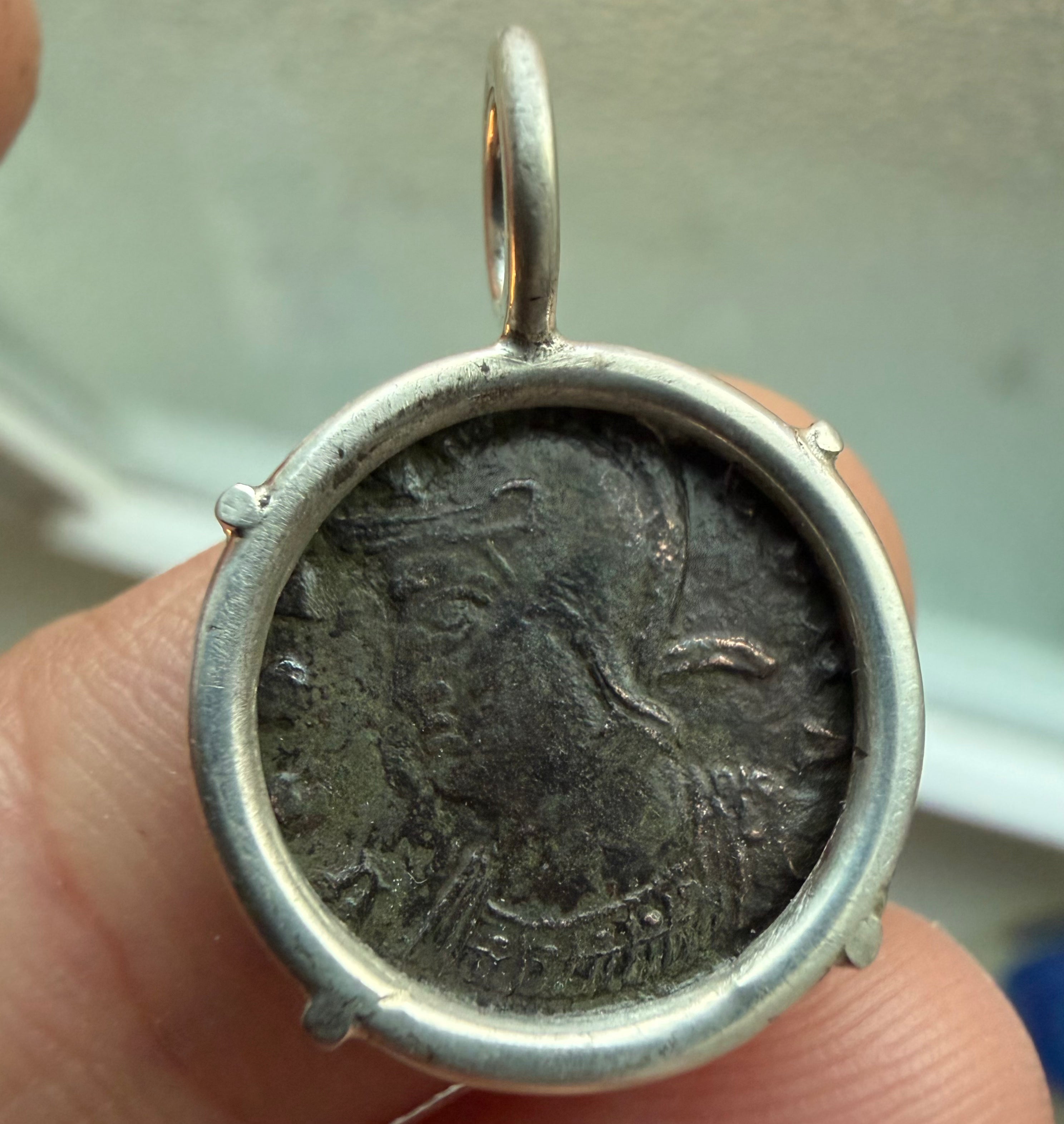
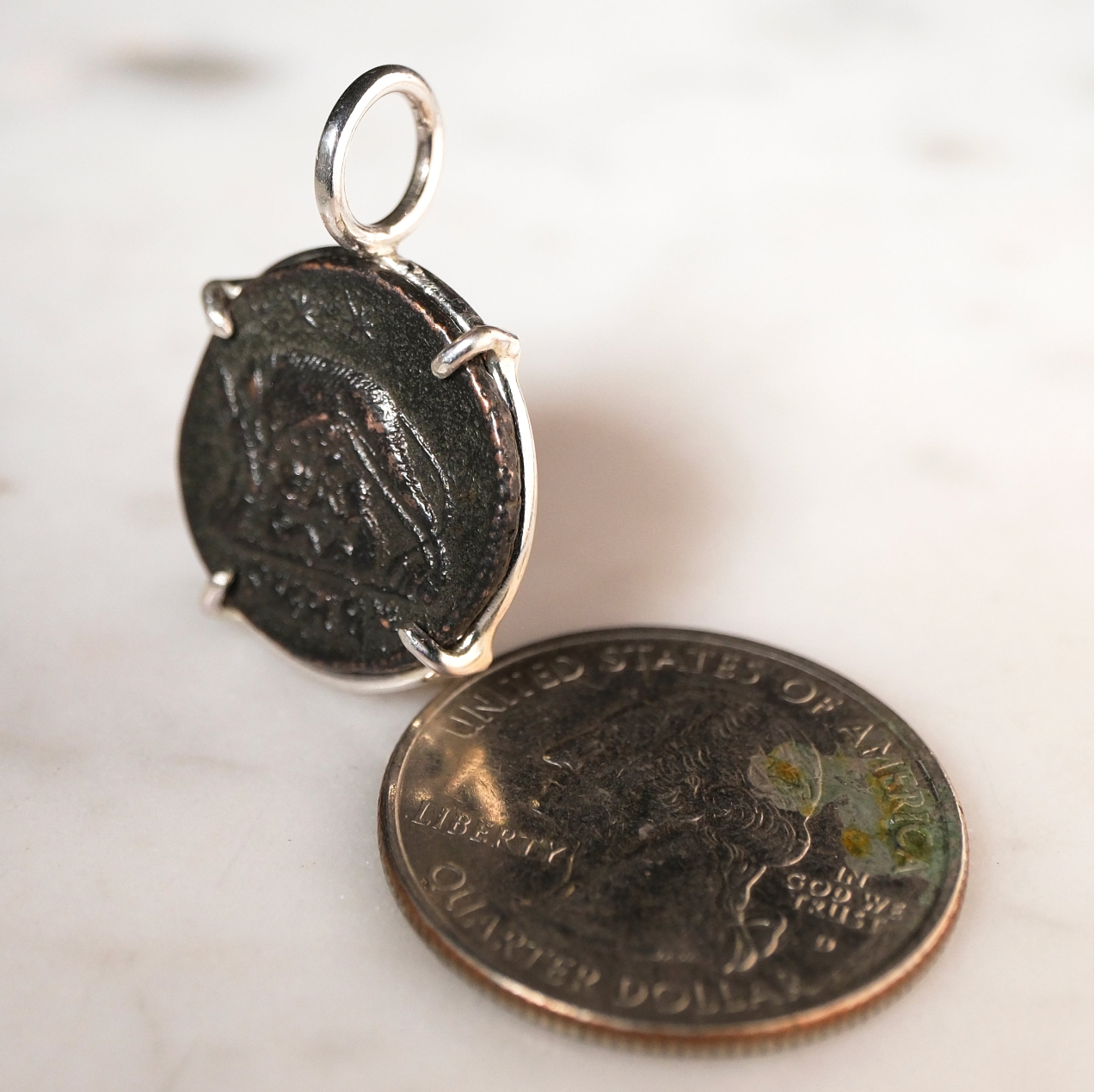
For modern collectors and jewelry enthusiasts, the coin offers both beauty and meaning. When set into fine jewelry, like the one-of-a-kind pieces at Peregrine Pendants, it becomes wearable mythology: a talisman of resilience, origin, and identity.
It’s a piece of ancient storytelling you can carry with you and add your own story to.
Looking for Authentic Ancient Coin Jewelry?
Peregrine Pendants specializes in transforming genuine ancient coins, such as the Romulus and Remus motif, into heirloom-quality jewelry. Explore our collection or learn more about the history behind each coin.
Share:
Athens’ Owl Coin
The Timeless Allure of the Marcus Aurelius Ancient Coin